Systems
Six resin systems, specified to the slab
Every job starts with prep — diamond grinding, self-leveler removal, patching and joint work — then the system that matches the traffic, chemicals and downtime you can afford. We manufacture our own epoxy, so the mix is built for the floor rather than pulled off a shelf.
Six systems, and most buildings only ever need one of them. The table below is the short version; each system has a page of its own with the thickness, the cure window, the prep it demands and the jobs it has no business being on.
Sample shelf
Drag to turn the samples
Cut tiles of each system. Drag to turn them, hover to lift, click one to open its page.
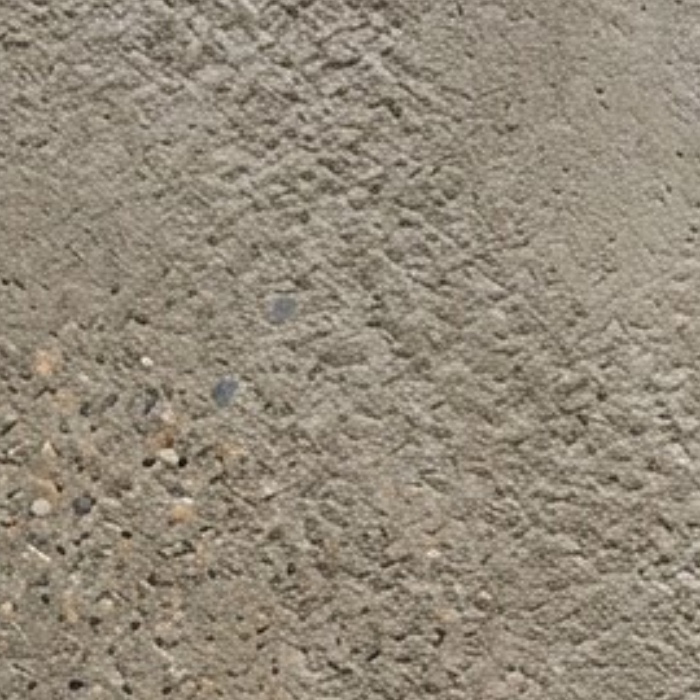

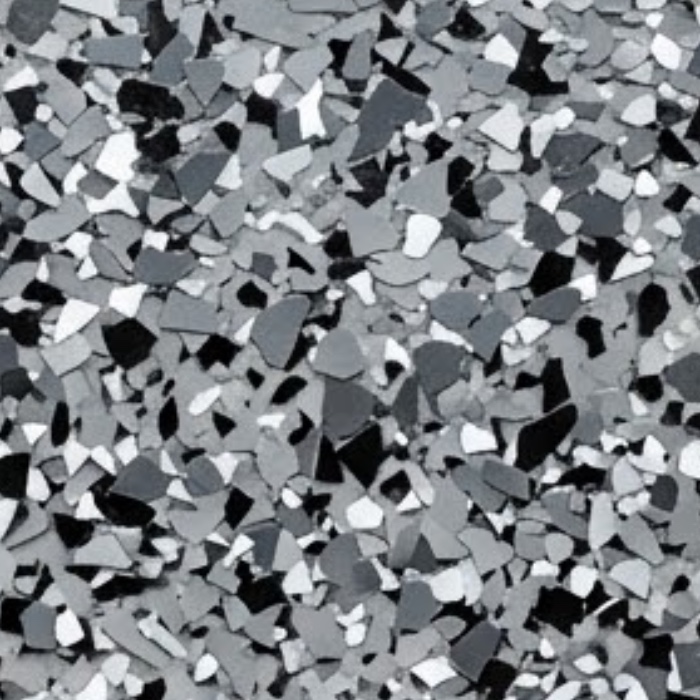
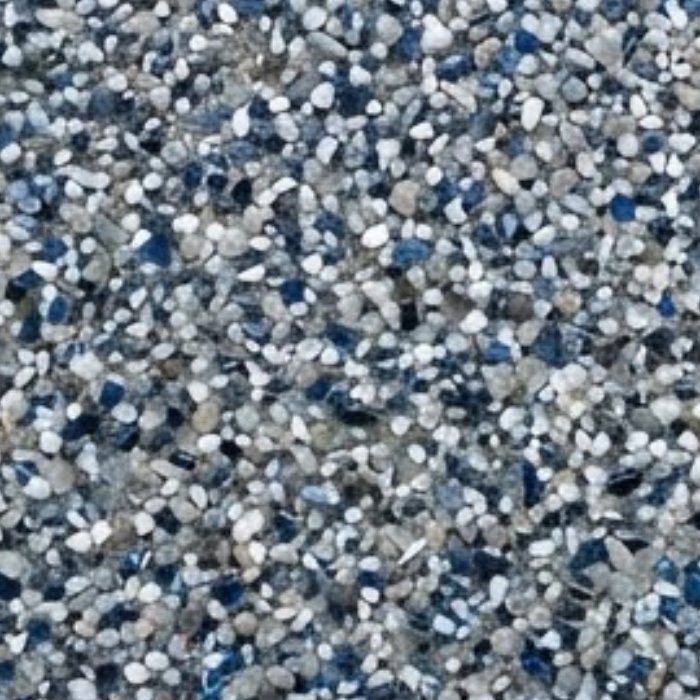
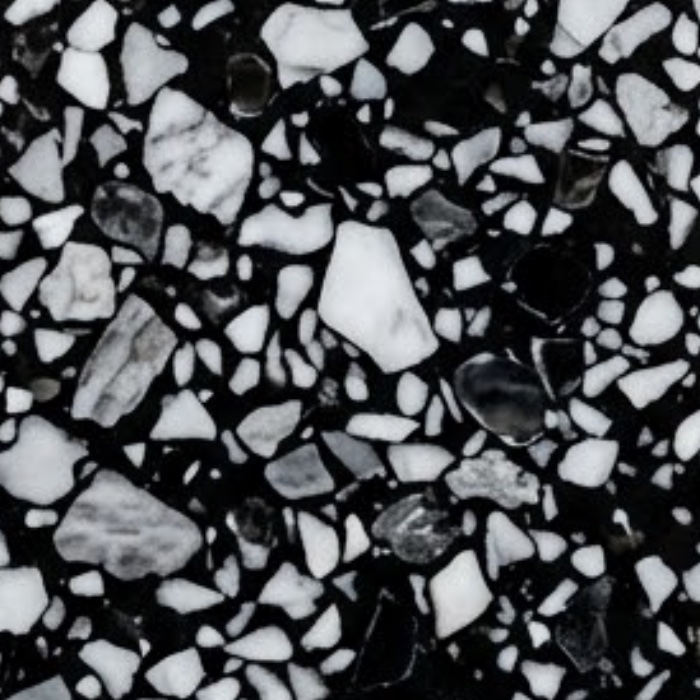
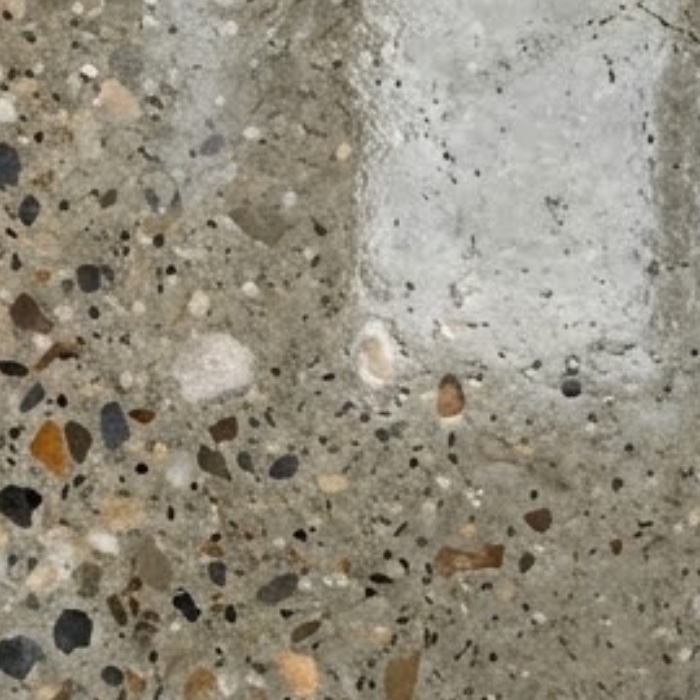
Physical samples of each system. Ask for a sample board on your site visit.
The short version
Which system do I need?
Chemical resistance is relative to the other five, not absolute. Cure windows assume a heated building — a cold slab slows every resin system down, which is worth planning for rather than discovering.
| System | Best for | Thickness | Cure to service | Chemical resistance |
|---|---|---|---|---|
| Urethane cement | Wash-down, thermal shock, food & pharma | 3/16" – 3/8" | Next day, typical | Highest — acids, caustics, steam |
| Solid color epoxy | Warehouses, manufacturing, storage | 10 – 30 mils | Foot next day, traffic 3+ days | Moderate — oils, most solvents |
| Quartz broadcast | Dealerships, kitchens, labs | 1/8" – 1/4" | Foot next day, traffic 3+ days | High — fluids, salts, cleaners |
| Flake systems | Shops, showrooms, locker rooms | 20 – 40 mils | Foot next day, multi-day build | Moderate to high — sealed in urethane |
| Epoxy terrazzo | Lobbies, concourses, schools | 3/8" | Multi-week programme | Moderate — sealed, cleanable |
| Polished concrete | Distribution, retail, offices | None — the slab itself | Immediate | Low — densified, still concrete |
01
Urethane cement
A cementitious urethane mortar that tolerates thermal shock, steam cleaning, acids and heavy wheel traffic. It breathes, so it can go over slabs with moisture that would blister a straight epoxy. This is the system for wet production areas and freezer floors.
Urethane cement in full- Best for
- Food & beverage, pharma, coolers, wash-down areas
- Thickness
- 3/16" – 3/8" mortar
- Finish
- Matte, slip-resistant broadcast optional
- Return to service
- Typically next day
02
Solid color epoxy
Pigmented epoxy rolled or squeegeed to a seamless, non-porous surface. It brightens a dark building, wipes clean, and takes line striping and safety markings cleanly. The most cost-effective way to turn a raw warehouse slab into a floor you can maintain.
Solid color epoxy in full- Best for
- Warehouses, service bays, manufacturing, storage
- Build
- Prime + two pigmented coats + topcoat
- Finish
- Gloss, satin or matte
- Colors
- Mixed in-house to your spec
03
Flake systems
Vinyl chip broadcast into wet epoxy, then ground back and sealed with urethane. The chip blend hides tire marks, dust and future patch repairs, and the ground texture holds traction without feeling rough underfoot.
Flake systems in full- Best for
- Service shops, showrooms, locker rooms, garages
- Build
- Full broadcast, double-scraped, two urethane coats
- Finish
- Light orange-peel texture
- Blends
- Any chip size and color combination
04
Quartz broadcast
Colored quartz aggregate broadcast to refusal — usually two full broadcasts — for a thick, dense, slip-resistant floor. It carries impact and point loads better than a rolled coating and still reads as a finished architectural surface. The 24,000 sq ft double broadcast at Bob Rohrman was this system.
Quartz broadcast in full- Best for
- Dealerships, kitchens, labs, high-traffic corridors
- Build
- Two broadcasts, ground back, sealed
- Thickness
- 1/8" – 1/4"
- Finish
- Textured, slip-resistant
05
Epoxy terrazzo
Marble, glass or granite aggregate set in epoxy matrix, then ground and polished flat. Divider strips let you run logos, borders and color fields. It is the longest-lived floor we install — measured in decades, not recoat cycles.
Epoxy terrazzo in full- Best for
- Lobbies, concourses, schools, hospitals
- Build
- 3/8" aggregate matrix, ground and polished
- Finish
- Polished, sealed
- Design
- Inlays, logos, divider strips
06
Polished concrete
Mechanically grind the existing slab through progressive diamond grits, densify it, and polish to the gloss you want. Nothing is added to wear off, so there is no recoat cycle — and with our own grinders on site we can run large square footage on nights and weekends.
Polished concrete in full- Best for
- Distribution centers, retail, offices, big-box
- Process
- Grind, densify, polish, guard
- Exposure
- Cream, salt-and-pepper or full aggregate
- Gloss
- Level 1 – 4
Before the resin
Surface prep & concrete work
Diamond grinding
Dust-collected grinding to profile the slab or strip old coatings — 28,000 sq ft in a single Kenosha mobilization.
Self-leveler removal
Demolition of failed toppings, including 5 inches of self-leveler taken off a 10,000 sq ft Chicagoland warehouse.
Patching & leveling
New concrete, spall repair, joint filling and re-leveling so the finish coat has something sound to bond to.
Overnight shifts
We schedule around production. Three consecutive overnight shifts covered 36,000 sq ft in Milwaukee.
Not sure which system?
Tell us the square footage, the traffic and the downtime window. We'll spec it.